



Discover The Dingle Way
-
Frequently Asked Questions
Are these guided or self-guided Dingle Way tours?
Our trips are self-guided. You travel independently without a group or guide, while we take care of the planning and 24/7 support, including daily luggage transfers. You navigate our curated itineraries with our award-winning app and enjoy hand-picked lodgings each night and a hearty Irish breakfast each morning.
How difficult is the Dingle Way?
The Dingle Way is rated as moderate, though the wind, wet conditions and cliff ascents can be considered somewhat of a challenge on certain days. The easiest options is our curated Best of the Dingle Way, while our 6 day version cuts out several days of the route, requiring less overall stamina, but some days can still be moderately challenging. Our 8 day version has the longest daily miles, and it covers the full trail along with our 10 day version which offers less daily miles. Most of the full trail tours require between 6 to 8 hours per day of hiking.What is the terrain like on the Dingle Way?
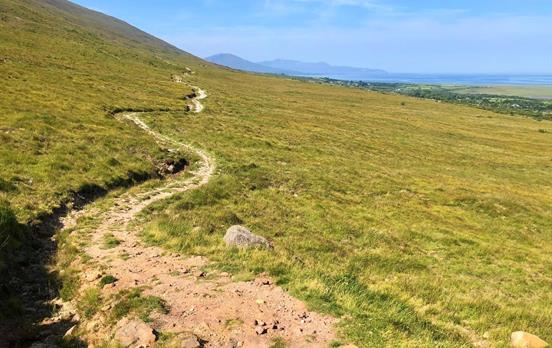
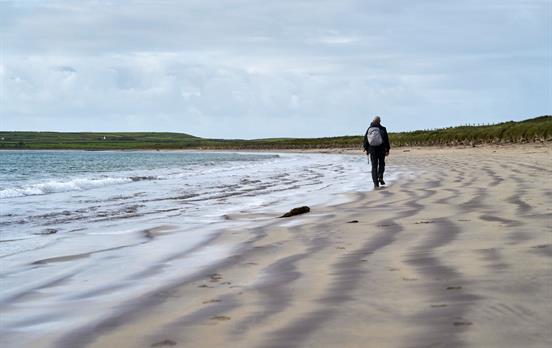
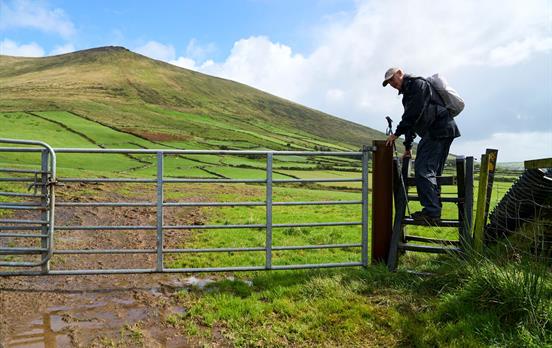
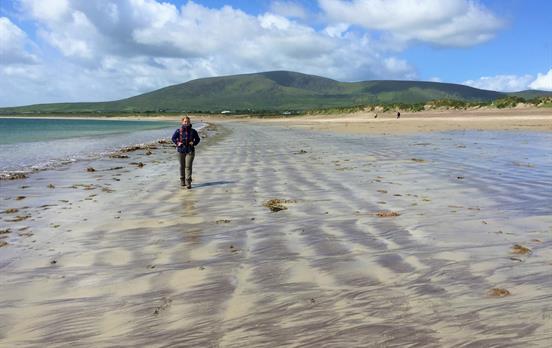
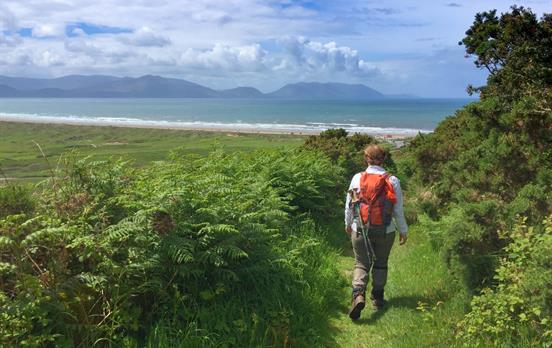
The Dingle Way has decent to good terrain which may include forest tracks, board walks, beach crossings, cliff trails and minor roads. The official route does not go any higher than 650m/2132 ft (the ascent over a spur of Mount Brandon), and elsewhere it never rises above 350m/1148ft. So while undulating, the Dingle Way is comparatively low-level. Several beaches provide great walking (about 17% of the Way), however overall about 48% of it follows tarmac (bitumen) roads, although you will have covered nearly half of this upon reaching Dingle. This reflects the fact that rights of way are almost non-existent in Ireland, and this in common with other Irish trails. The road walking is scenic and mostly along quiet lanes, however there are from time to time some busier stretches where you will need to be cautious with traffic.What is included in your Dingle Way tour packages?
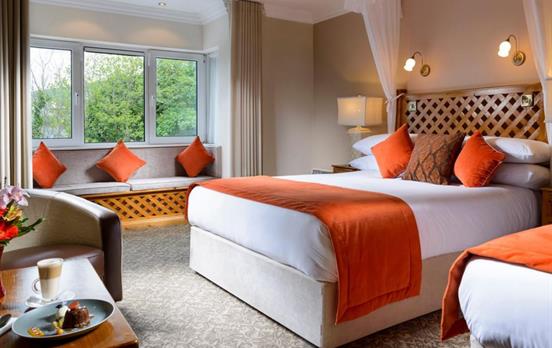
Most trips include accommodation, daily breakfast, luggage transfers as applicable, route guidance in the Macs Adventure app, and 24/7 support.![Frequently Asked Questions]()
-
Dingle Way vs Kerry Way
We are often asked - which is better, the Dingle Way or the Kerry Way? The answer is, it depends! Both offer otherworldly landscapes, rich histories, and a hearty dose of Irish hospitality. But which one is right for you? Click here to find out...
![Dingle Way vs Kerry Way]()
-
Why hike the Dingle Way with Macs Adventure?
With over 20 years of experience and expertly planned self-guided trips, Macs Adventure makes hiking the Dingle Way in Ireland feel easy. We arrange handpicked stays with daily breakfasts, luggage transfers, and route guidance in our app, so you can travel at your own pace with 24/7 support and the freedom to enjoy the journey. Dive into our Complete Ireland Travel Guide to learn why we think an active adventure along the Dingle Way in Ireland should be on your bucket list!
![Why hike the Dingle Way with Macs Adventure?]()
-
When is the best time to hike the Dingle Way?
Our self-guided Dingle Way hiking tours begin in the early spring, late March and April, which sees fewer travelers, mistier weather but plenty of green vistas and blossoms. The most reliable weather however can be found in the summer months, along with warmer temperatures. And unlike Scotland - midges are not really a problem along the Dingle Way due to the coastland winds. The rich colors of autumn can be seen in September and early October, making this a special time to go, even if the chance of mist and rain is a bit higher. Learn more in our Seasonal Guide to Ireland
![When is the best time to hike the Dingle Way?]()
-
Sustainable Travel along the Dingle Way
Renowned for its spectacular wild and rugged landscapes, the Dingle Peninsula also lays claim to a rich cultural heritage with an ancient ruins and language, welcoming residents, longstanding traditions, and outstanding food. Residents and members of Dingle Peninsula Tourism Alliance have recognized their responsibility to keep the area protected, to allow future generations to enjoy it as much as we do today.
Here are some simple ways to contribute during your visit!
Say “NO” to plastic – a great way of doing this is limiting the use of straws, plastic drinking bottles, plastic coffee cups and plastic bags.
Leave no trace – carry your personal waste such as wrappers from snacks and other items and avoid littering along the route.
Stay local, shop local – Support the local communities by eating and shopping locally!
Let nature's sounds prevail – enjoy your experience, keep your noise to a minimum and respect farm animals and wildlife around you (with the added bonus of a higher chance of finding them!)
Leave what you find – Don’t take home rocks, plants or flowers as souvenirs as some of these can be valuable for the natural habitats.
Curious to know more? Read Our Sustainable Travel Journey.
![Sustainable Travel along the Dingle Way]()
-
Gaeltacht and the local lingo
The Dingle Peninsula is one of the main "Gaeltacht" areas of the Emerald Isle, where the Irish language (Gaelic) is widely spoken at home, in schools and even the workplace. Due to its remote location, it was removed from the influences of the modern world for a long time and the local language and traditions have largely remained intact. Staying in "Gaeltacht" villages means you get to really immerse yourself in the Irish cultural heritage.
You can be sure to come across the Gaelic symbols during your Dingle Way adventure - road signs, names, descriptions and even menu items! Learning a few phrases will help you to get a deeper understanding of the people of this beautiful part of the world.
Here are a few sentences to practice:
Good morning - "Maidin Mhaith" (pronounced: mod-jin wot)
Cheers - "Slainte" (pronounced: slawn-cheh)
I speak only a little Irish - "Níl agam ach beagáinín Gaeilge" (pronounced: kneel ah-gum ock byug-aneen gayle-geh)
Thank you - "Tapadh leat" (pronounced: tapah lat)
The weather is beautiful today - "Ta an aimsir go halainn inniu" (pronounced: taw an eyeim-shur guh haul-inn inn-you)
![Gaeltacht and the local lingo]()
-
Dingle Peninsula & Hollywood Actors
With a landscape as rugged and wild as the Dingle Peninsula, it comes as no surprise that it has attracted famous film producers, some of these include Star Wars, Ryan’s Daughter, Far & Away, and Playboy of the Western World.
Some, but not all, of the prime filming locations were…
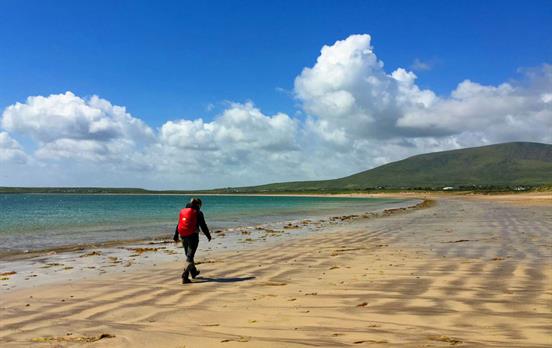
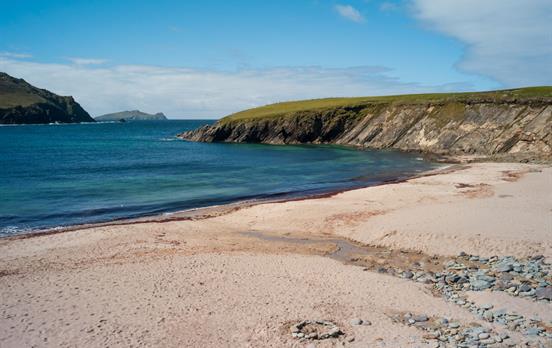
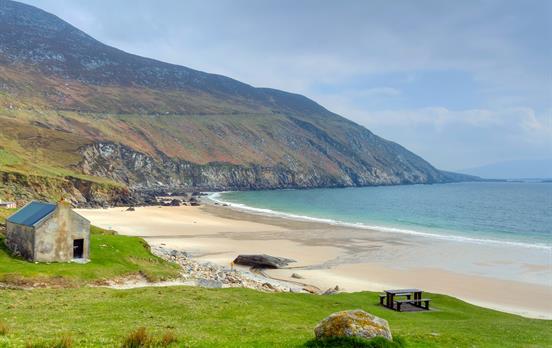
Beaches – Inch Beach is one of the most popular beaches, with a long golden stretch of sand and windswept dunes stretching out into Dingle Bay. Another great spot is the beautifully shaped Ventry Beach, near the Gaeltacht village of Ventry. And finally, Coumeenole Beach, offering dramatic scenery used as a filming location of Ryan’s Daughter.
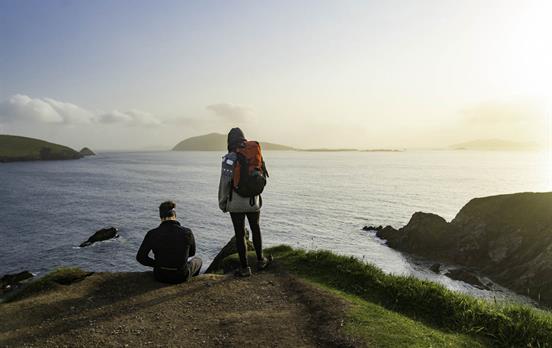
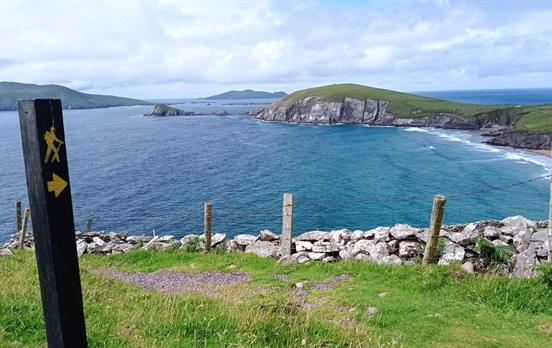
Slea Head – From the tip of Slea Head you can enjoy far-reaching views to the Blasket Islands and Dunmore Head on the mainland – a Star Wars film location. The coastline made the ideal hiding place for Luke Skywalker’s X-wing.
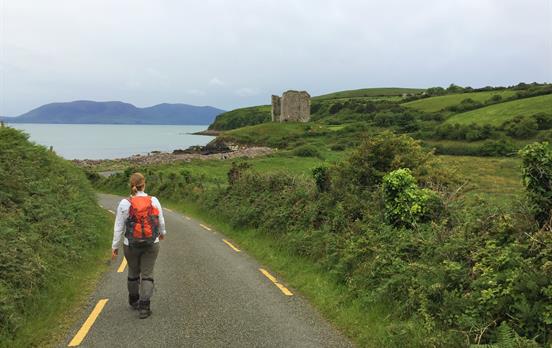
Castles & Ruins – The ruins of Minard Castle are positioned on a hill, overlooking a small bay with views across the Irish Sea. It was once the stronghold for the Knights of Kerry before it was attacked by the English army in 1650. The ruin is seen in Ryan's Daughter, where the Major and Rose meet.
‘Clocháns’ – These drystone Beehive Huts have been built by the monks on Skellig Michael over many centuries using the ancient method of Corbelling. This style of building dates back to the Neolithic Period. In the Star Wars film 'The Last Jedi' the 'clocháns' were the ancient Jedi shelters where Luke Skywalker resided.
![Dingle Peninsula & Hollywood Actors]()









 Canada