



The Camino Le Puy - or the Via Podiensis as it's known in Latin - is France's most celebrated pilgrimage route. Starting in the dramatic volcanic city of Le Puy-en-Velay and winding its way 735km (456miles) south-west to Saint-Jean-Pied-de-Port at the foot of the Pyrenees, this is a hike that will stay with you long after the blisters have healed.
Less crowded than the famous Camino Francés in Spain, the Le Puy route still has all the soul, all the camaraderie, and all the scenery you could hope for - just with considerably more French cheese and wine along the way. Whether you're a seasoned long-distance walker or looking for your first big adventure, this route has a way of getting under your skin.

Best Time to Visit
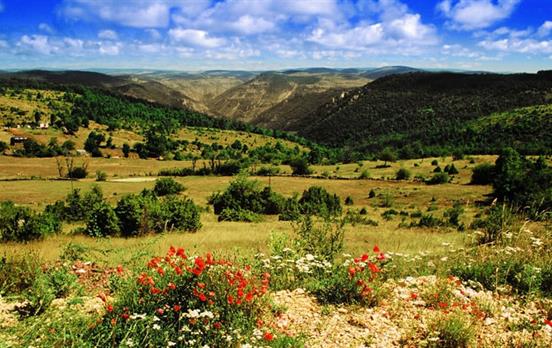
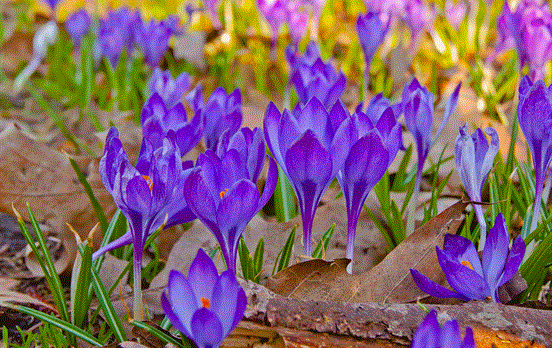
Spring and fall are the sweet spots for walking the Camino Le Puy. April through June brings mild temperatures, wildflowers across the Aubrac plateau, and a real sense of the countryside coming alive. September and October are equally good - the summer crowds have thinned, the harvest is underway in the vineyards, and the light is golden. Perfect conditions for both hiking and photography.
July and August are popular, but the heat across the Auvergne and the Lot can be intense, particularly in the afternoon. If you do hike in summer, aim to start each stage early - most experienced pilgrims are moving by 7 am to make the most of the cooler morning hours. The route is quieter in summer than the Camino Francés, but accommodations book up faster than you'd expect.
Winter walking is possible, but many gîtes (pilgrim hostels) and smaller restaurants close between November and March, so your options for accommodations and food become limited. It’s for these reasons that Macs doesn’t offer Camino Le Puy itineraries during these months.

Difficulty and Terrain
The Camino Le Puy is rated as moderate overall, though that doesn't mean it's without its challenges. The opening stages through the Velay Massif involve some steep climbing, and the Aubrac plateau - an almost treeless expanse of high moorland - can feel relentless when the weather turns. Pack a waterproof even in summer.
Daily stages typically cover 16-35km (10-22 miles), with most hikers taking between 4 and 6 weeks to complete the full route. That said, you don't have to walk it all at once - many people do it in sections, returning year after year to pick up where they left off. There's no wrong way to do it.
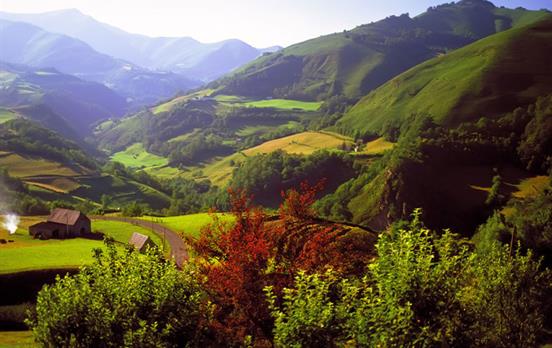
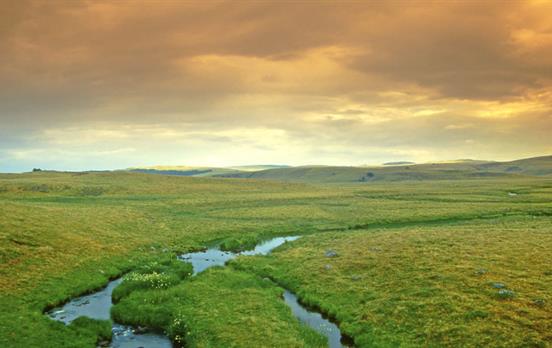
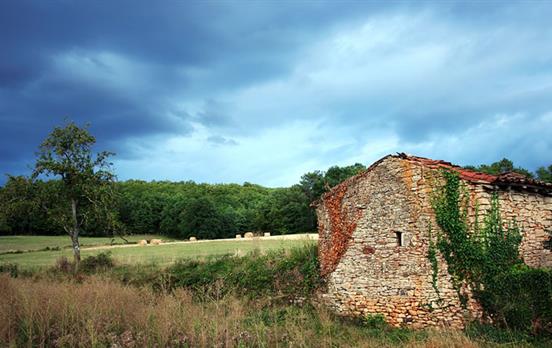
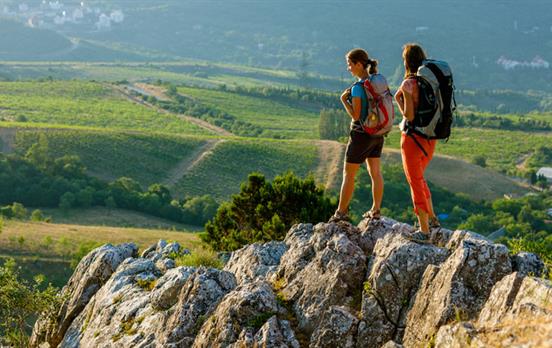
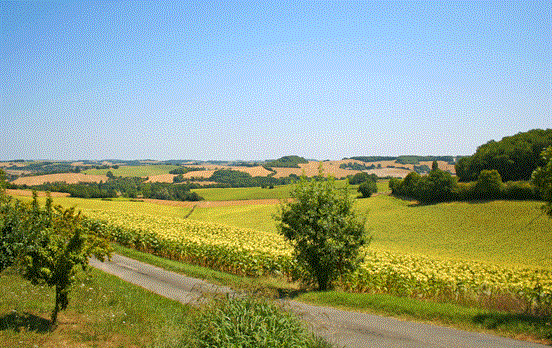
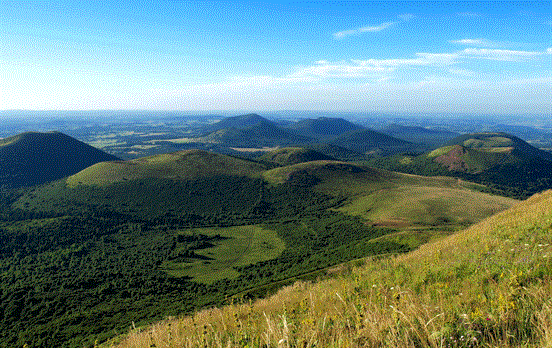
The terrain is beautifully varied across the route. Expect volcanic hills in the early stages, followed by river valleys, limestone gorges, rolling farmland, and eventually the green Basque foothills as you approach Saint-Jean-Pied-de-Port. The path is well-waymarked throughout as the GR65, with the distinctive red and white markers of France's Grande Randonée network keeping you on track alongside the Macs app.

Highlights and Landscapes Along the Way
The scenery on the Camino Le Puy is genuinely varied and consistently impressive. Here are some of the standout moments to look forward to:
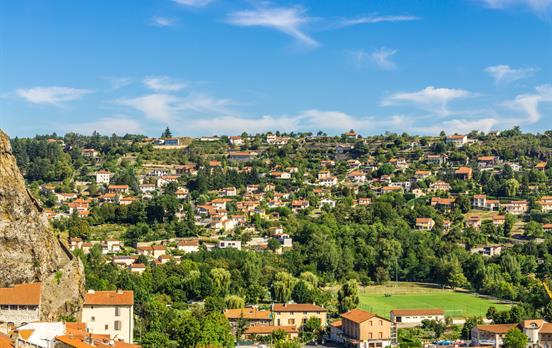
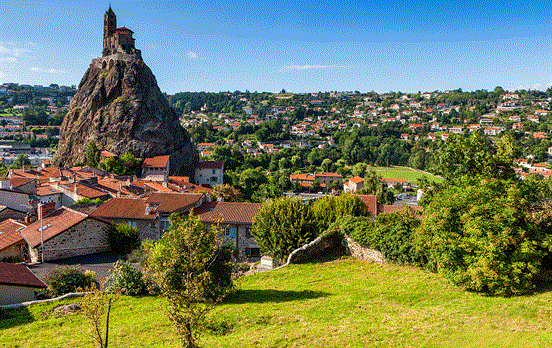
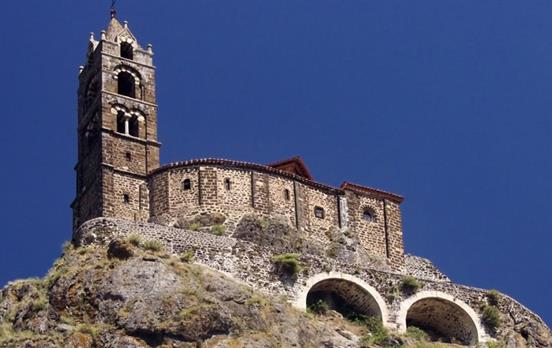
- Le Puy-en-Velay - your starting point is one of the most striking small cities in France. The Notre-Dame Cathedral, perched atop a volcanic rock, is a UNESCO World Heritage Site, and the Saint-Michel d'Aiguilhe chapel - balanced on an 85-meter volcanic needle - is something you'll need to see to believe.
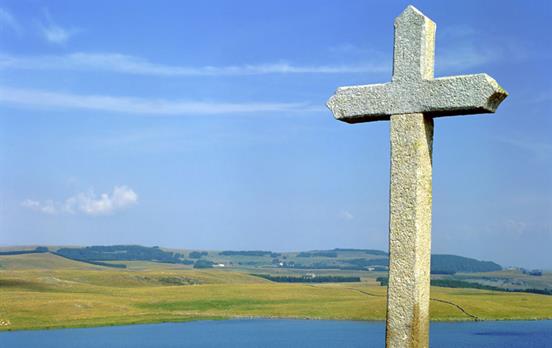
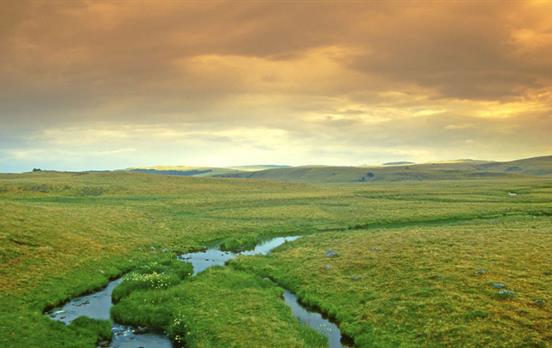
- The Aubrac Plateau - a vast, windswept moorland that feels like walking through a landscape painting. Wildflowers in spring, russet tones in fall, and a real sense of space and solitude, whatever the season.
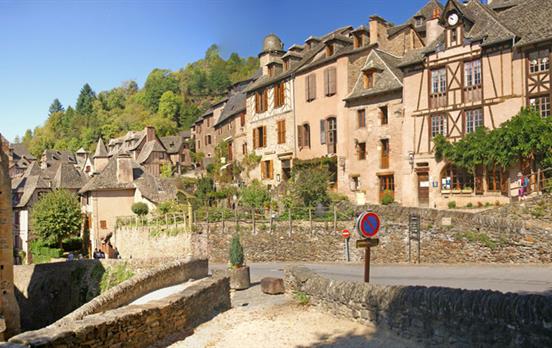
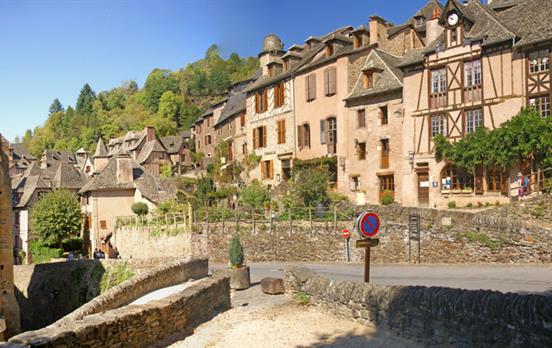
- Conques - widely considered one of the most beautiful villages in France, and for good reason. The medieval abbey of Sainte-Foy is a masterpiece of Romanesque architecture, and the village itself feels like it hasn't changed in centuries.
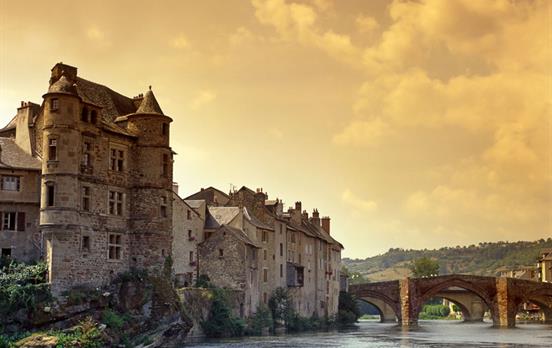
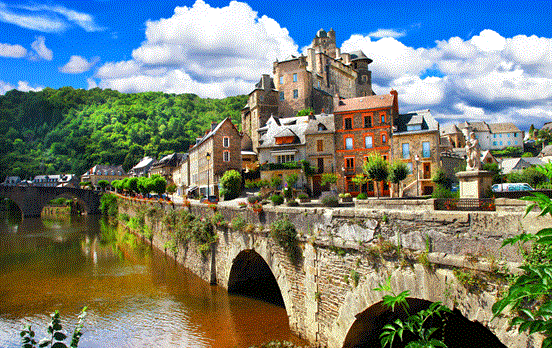
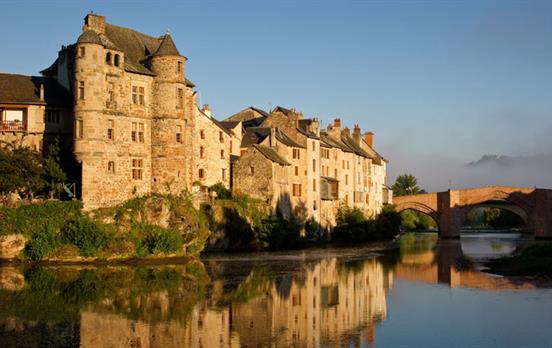
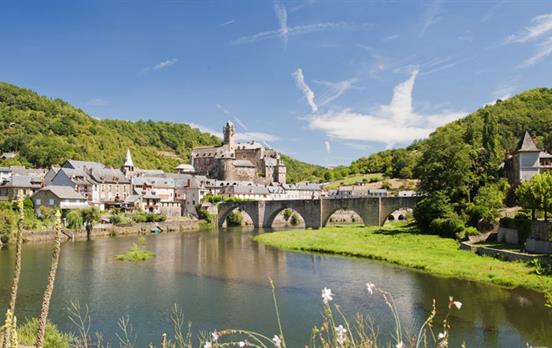
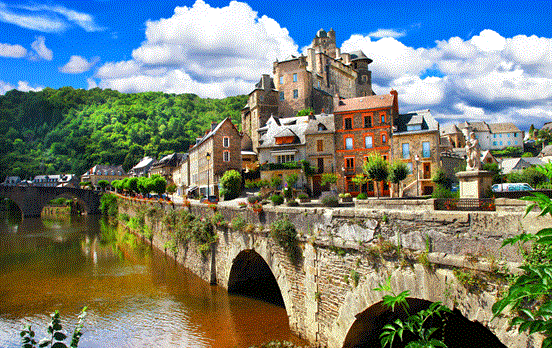
- Estaing - a picture-postcard village on the River Lot with a 15th-century château and a UNESCO-listed Gothic bridge that makes for a pretty fine end to a long day on your feet.
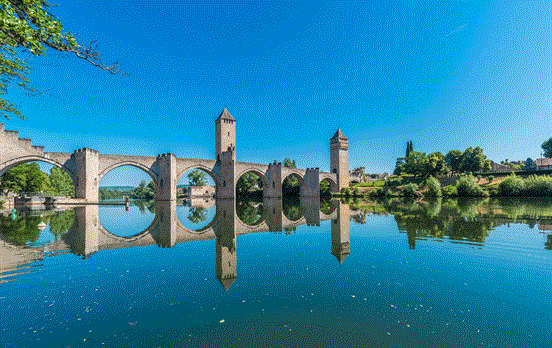
- Cahors and the Lot Valley - dramatic limestone cliffs, river views, and the famous Pont Valentré bridge. The local Malbec wine is reason enough to linger.
- Saint-Jean-Pied-de-Port - the final destination, a beautifully preserved Basque town in the shadow of the Pyrenees. From here, the Camino Francés continues into Spain - though whether you choose to carry on is entirely up to you.

How to Get to the Camino Le Puy
Le Puy-en-Velay sits in the Haute-Loire department of central France. The easiest approach is to fly into Lyon Saint-Exupéry Airport, then take a train to Saint-Étienne and connect to Le Puy - a total journey of around 3 hours. Paris is also a solid option if you're traveling internationally, with good train connections south.
At the end of your walk in Saint-Jean-Pied-de-Port, regular bus and train connections link back to Bayonne, from where you can travel north by train. Planning the transport can feel like the tricky part, but it's far easier than it looks once you start looking into it.
For full details on getting to the start of the Camino Le Puy and back from Saint-Jean-Pied-de-Port, check out our Camino Travel Guide - it walks you through all your transport options step by step.

What to Pack for the Camino Le Puy
Packing light is the golden rule on any Camino, and the Le Puy route is no exception. Your feet will thank you for every gram you leave at home.
The essentials are:
- well-worn-in walking boots (never break them in on the trail)
- moisture-wicking socks
- Trekking poles
- Daypack
- a waterproof jacket
- a pilgrim credential (your stamp booklet)
Beyond the basics, your kit list will depend on the time of year and how much you plan to carry day to day. If you're booking with Macs Adventure, we take care of your luggage transfers between stages - so your main bag travels ahead while you walk with just a light daypack. That changes the packing equation considerably.
Need a full kit list? Our What to Pack for a Camino Hiking Vacation guide covers everything from footwear to first aid, with top tips on keeping your pack light without leaving anything essential behind.

Things to Do Along the Camino Le Puy
The Camino Le Puy isn't just a walk - it's a route through living French history, and there's plenty worth pausing for along the way.
Visit the Pilgrim Landmarks
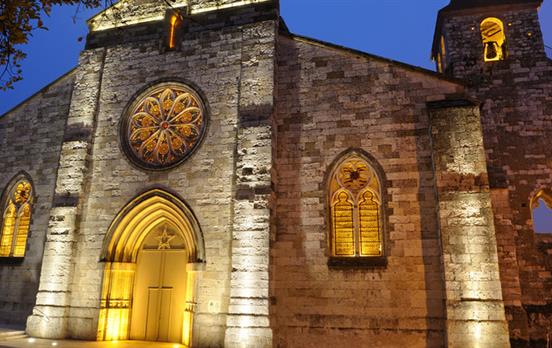
The route is studded with UNESCO World Heritage Sites and historic monuments that have welcomed pilgrims for over a thousand years. Make time for the Abbey of Sainte-Foy in Conques (arrive early to beat the coach trips), the Notre-Dame Cathedral in Le Puy-en-Velay, and the remarkable Pont Valentré in Cahors.
Explore the 'Plus Beaux Villages de France'
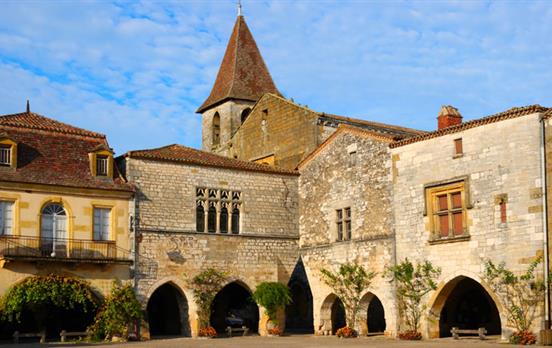
Several villages along the route are officially designated among France's most beautiful - and the designation is well earned. Conques, Estaing, Saint-Côme-d'Olt, and Auvillar are all standouts. Don't rush through them.
Visit the Market Towns
The route passes through some wonderful market towns where local life carries on in fine French style. Figeac on a Saturday morning is a particular treat, with a market that's been running since the Middle Ages. Moissac's famous Romanesque cloister is also well worth a detour.
Coin Collecting and Quirky History
In Eauze, the local museum houses a collection of 28,000 Roman coins discovered in the area - one of those unexpected delights that makes this route feel endlessly interesting.
Simply Walk
Honestly? Some of the best moments on the Camino Le Puy come from simply putting one foot in front of the other and letting the route do its thing. The conversations, the silences, the unexpected views - they're the real highlights.

What to Eat and Drink
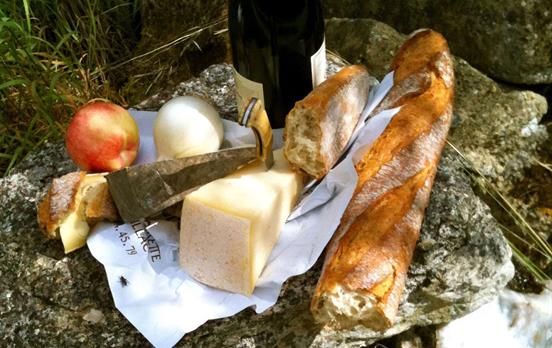
Walking 25km (15 miles) a day is an excellent justification for eating extremely well, and the Camino Le Puy passes through some of France's finest culinary regions. This is one area where the route genuinely outshines its Spanish counterpart.
Auvergne
The early stages take you through Auvergne - a region known for its hearty mountain food. Look out for aligot, a gloriously indulgent dish of melted Tomme cheese stretched through mashed potato until it becomes almost elastic. It's rich, warming, and exactly what you need after a long day in the hills. Truffade (potato and cheese fried together) and stuffed cabbage are other regional staples worth seeking out.
The Lot
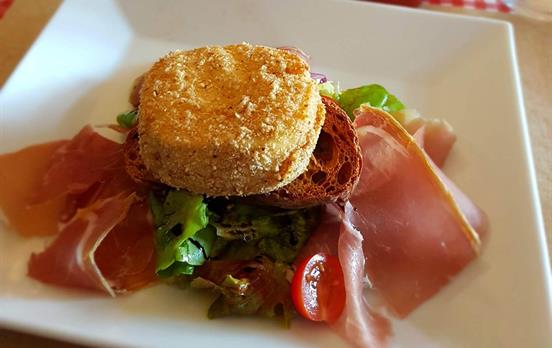
As the route moves into the Lot Valley, the food gets lighter, and the wine gets better. This is black truffle country, duck confit territory, and the home of Cahors Malbec - a rich, full-bodied red that pairs brilliantly with the local fare. Don't leave without trying a confit de canard if you haven't already.
Gascony
Further south, Gascony brings Armagnac, the region's celebrated brandy - you'll pass vineyards and distilleries along the route. The town of Condom is the capital of Armagnac country, and the local foie gras and cassoulet are as good as you'd expect.
The Gîte Dinner
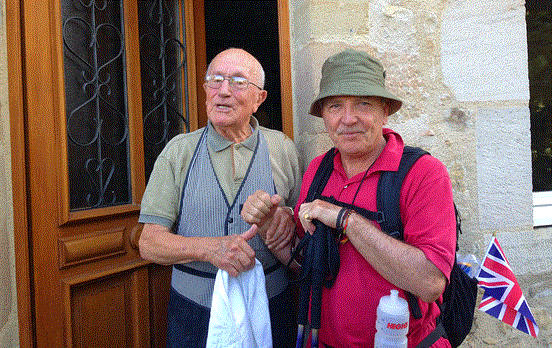
One of the great pleasures of the Camino Le Puy is the evening meal at your gîte or small auberge. Many smaller places offer a set pilgrim menu - three or four courses, house wine included - where you eat alongside fellow hikers and swap stories from the day. It's one of the most convivial eating experiences you'll have anywhere.
What to Drink
Water first - stay hydrated on the trail. But in the evenings, the local wine is genuinely excellent and extremely affordable. A carafe of house red at the dinner table costs very little and tastes considerably better than it has any right to. Coffee is taken seriously in France, and the morning café crème is as much a ritual as the walking itself.

Types of Accommodations Along the Camino Le Puy
Accommodations on the Camino Le Puy are varied, with options to suit different budgets and different ideas of comfort at the end of a long day.
If you're walking with Macs Adventure, we hand-pick accommodations at each stage - typically small, comfy, family-run places with private rooms, en-suite facilities and a strong sense of local character.
Gîtes d'Étape
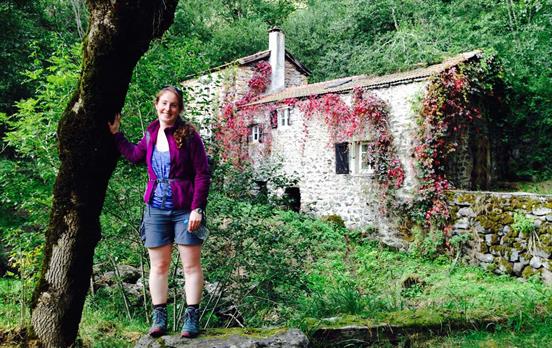
The gîte is the French equivalent of the Spanish albergue - a pilgrim hostel, often run by a local family, with dormitory beds and shared facilities. Most offer an evening meal and breakfast, and the quality ranges from basic to genuinely charming. They're where the Camino community really comes together - expect good conversation, shared stories, and the kind of camaraderie that you can't manufacture.
Chambres d'Hôtes
For something a bit more private, chambres d'hôtes (French B&Bs) are found in many towns and villages along the route. Standards are generally high - expect a proper bedroom, a decent breakfast, and a warm welcome from your hosts.
Hotels
In larger towns like Cahors, Figeac, and Condom, there are hotels ranging from simple 2* to comfortable 3* and 4* options.

Helpful French Phrases to Learn
The Camino Le Puy is, for most of its length, a route through rural France, and while many hosts are welcoming and patient with language barriers, a handful of French phrases will go a long way towards enriching your experience. Most pilgrims you meet will be French, so even a basic greeting opens doors.
Here are some to get you started:
- Bonjour / Bonsoir - Good morning / Good evening (use every time you walk into a room or past someone on the trail)
- Merci - Thank you
- S'il vous plaît - Please
- L'addition, s'il vous plaît - The bill, please
- Où sont les toilettes? - Where is the restroom? (never underestimate this one)
- Bon Chemin! - Have a good walk! (the classic pilgrim greeting on the Le Puy route)
Want to get up to speed before you go? Check out our Essential Phrases for the Camino article for a more complete guide to getting by in French on the trail - from ordering food to asking for directions and everything in between.

The Final Word
The Camino Le Puy is one of those routes that sounds like a lot - 735km (456 miles), four to six weeks, medieval villages, volcanic plateaus, the Pyrenees on the horizon - and yet somehow manages to deliver even more than it promises. It's a walk through the soul of rural France, at a pace that lets you actually notice it.
It's less crowded than the Camino Francés, more personal, more French - and for many hikers who've done both, it's the one they'd go back to. The gîtes, the food, the camaraderie around the dinner table at the end of a long day, the quiet satisfaction of watching Saint-Jean-Pied-de-Port come into view - it all adds up to something genuinely special.
Whether you're planning to hike the whole route or just a week-long section to see if it suits you, the Camino Le Puy has a way of getting its hooks in. Most walkers who start it come back to finish it. And plenty who finish it start planning the return trip before they've even taken their boots off.
Reasons to Book with Macs Adventure
Planning a Camino should feel exciting, not overwhelming. With Macs Adventure, everything is taken care of so you can focus on the experience itself.
- Carefully chosen accommodation with daily breakfasts
- Hand-picked accommodations
- Daily luggage transfers
- Detailed route info and navigation support via our award-winning app
- 24/7 emergency assistance
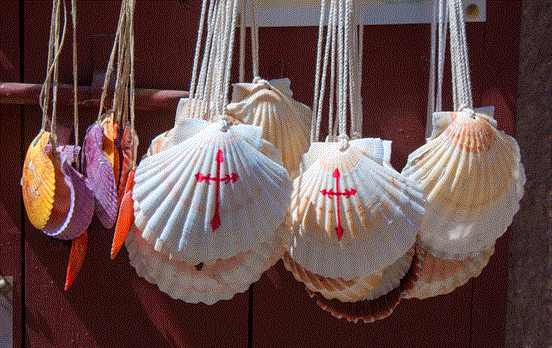
- Pilgrim passport and Camino shell included
All that’s left for you to do is follow the trail-and enjoy every step.

People Also Ask
- Ultimate Guide to the Camino de Santiago
Everything you need to know about routes, planning, and what to expect.
Read the ultimate Camino guide >
- What is a Camino?
A Camino is a long-distance pilgrimage journey, traditionally walked (or cycled), that follows historic routes leading to Santiago de Compostela in northwest Spain.
Learn more about the History of the Camino >
- Which Camino Is Right for Me?
Compare routes and find the Camino that best suits your pace, interests, and experience.
Find your Camino >
- What Should I Pack for My Camino Trip?
From footwear to essentials, pack smart and walk comfortably.
See the Camino packing list >
- Tips for Traveling to and From the Camino
Practical advice on flights, transfers, and route logistics.
Plan your journey >
- Essential Camino Phrases
Helpful Spanish phrases for pilgrims along the way.
Learn Camino phrases >
- How Fit Do I Need to Be to Walk a Camino Route?
Understand the physical demands and how to prepare.
- Camino FAQs
Clear answers to the most common Camino questions.
Read Camino FAQs >











 Canada